
Ecommerce SEO
Category Page SEO for Online Stores
Short helpful intros, crawl-safe filters and clear links to products.
By the Seozumi editorial team · · about 5 min read
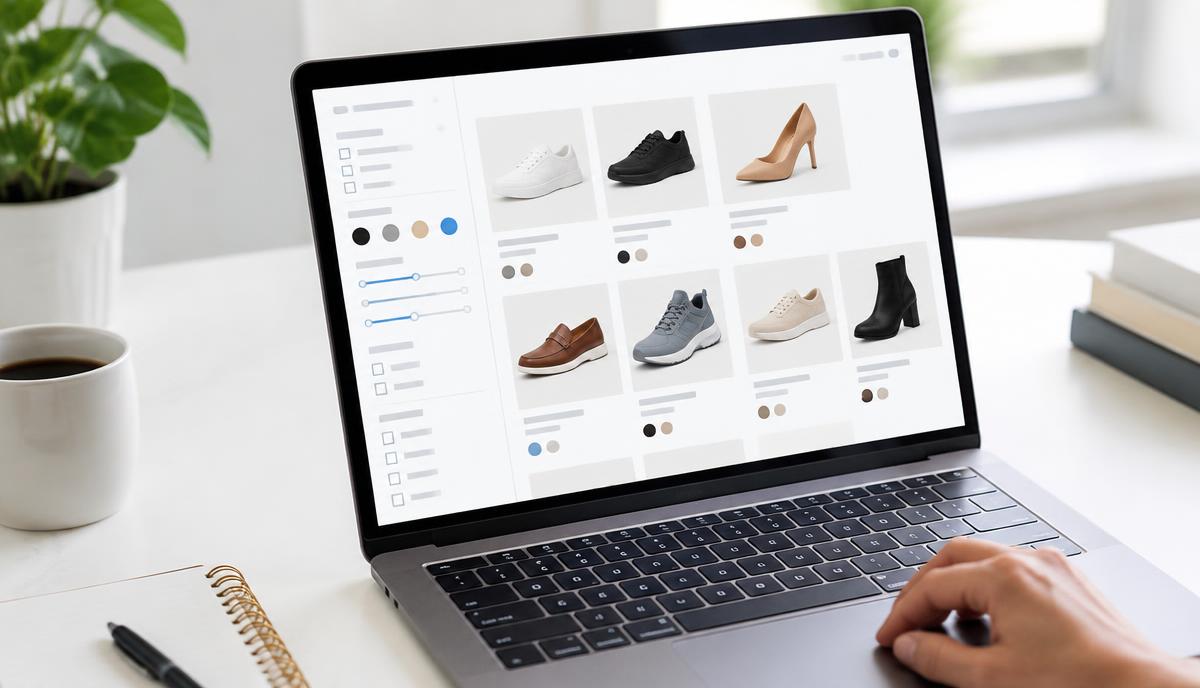
For many online stores, category pages such as “Women’s running shoes” or “Ceramic planters” are the pages that match the most valuable searches. Shoppers searching broad product terms want to browse options, not land on one product. A good category page helps them choose and helps search engines understand your range.
Add a short, useful introduction
A few sentences above or below the product grid can explain what the category includes and how to choose. Keep it helpful rather than a block of keywords:
- What the category covers and who it is for.
- Key differences between options (sizes, materials, use cases).
- Links to buying guides or subcategories.
Make products easy to reach
- Product links as normal HTML links, not only loaded after clicks.
- Clear product names, prices and availability on the grid.
- Subcategory links when the range is large.
- Breadcrumbs back to parent categories; see site structure and breadcrumbs.
Filters and sorting
Filters (colour, size, price) can create thousands of URL combinations with nearly identical content. Google’s guidance on managing faceted navigation explains the options. Practical approach for small stores:
- Keep sort orders and most filter combinations out of the index (canonical to the main category or noindex).
- Turn a filter into its own indexable page only when people search for it and it has enough products, such as “waterproof hiking boots”.
- Avoid linking every filter combination from navigation.
See canonical tags and duplicate content.
Pagination
For large categories, use normal paginated URLs (?page=2) with real links between pages, and let each page canonicalize to itself. Do not canonicalize every page to page one, because products on later pages may then be harder to discover. Infinite scroll should also have paginated URLs behind it.
Out-of-stock and seasonal categories
- Keep seasonal category URLs year-round and update them, rather than deleting and recreating.
- If a category is permanently gone, redirect it to the closest alternative.
Checklist
- Unique title and description per category.
- Short helpful introduction.
- Crawlable product links.
- Controlled filter URLs.
- Self-canonical paginated pages.
- Breadcrumbs and links from guides.
Combine this with strong product pages for a complete store structure.