How to Tell If Hidden Moisture Is Still in Your Property After Water Damage
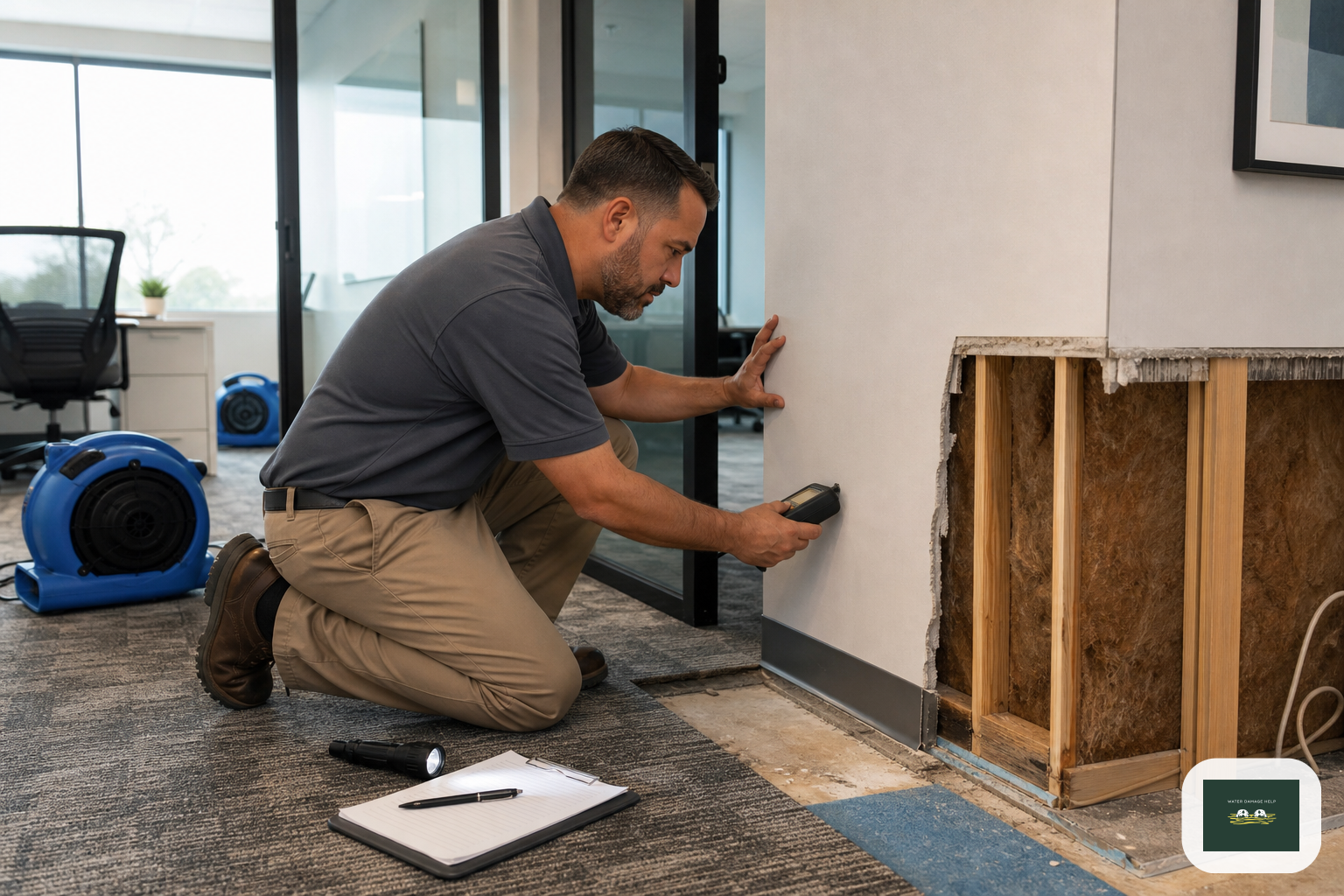
Hidden moisture can remain after cleanup and cause ongoing damage. Learn what moisture detection checks, the warning signs to watch for, and what to do next.
Hidden moisture can stay in walls, floors, and other materials long after visible water is gone. Professional moisture detection tools can help assess whether affected areas need further drying.
Why water can remain after the surface looks dry
Water damage often spreads farther than people expect. A wet carpet, soaked baseboard, or puddle on the floor may be the only visible sign, but moisture can move into drywall, subfloors, insulation, framing, and cabinets.
That is why cleanup is not complete when the standing water is removed. Even if a room looks fine, hidden dampness can continue to cause damage behind walls or under flooring. If the source was a leak, burst pipe, flood, or appliance failure, the affected materials may need to be checked carefully before repairs begin.
A professional moisture inspection looks for the areas that are most likely to trap water and identifies where drying is still needed. That helps reduce the chance of lingering damage and keeps the restoration process focused on the right places.
What moisture detection and inspection checks
Moisture detection is the process of finding water that is not easy to see. A proper inspection usually looks at both the obvious damage and the surrounding areas where moisture may have spread.
Common areas that need to be checked
- Drywall and baseboards near the affected area
- Flooring and subflooring
- Cabinets and trim
- Wall cavities and framing
- Insulation
- Ceilings below or near the source of damage
- Adjacent rooms that may have absorbed moisture
What the inspection may include
A restoration technician may use tools and visual checks to identify wet materials, track how far the damage spread, and decide what needs drying or removal. This can also help determine whether the property needs structural drying, dehumidification, or additional cleanup.
For property owners, the value of this step is clarity. Instead of guessing, you get a documented picture of what is still wet and what can safely move into the repair stage.
Signs that hidden moisture may still be present
Some warning signs are easy to miss because they develop after the initial cleanup.
- A musty or damp smell that does not go away
- Paint bubbling, peeling, or discoloration
- Warped flooring or swollen wood
- Soft or sagging drywall
- Baseboards pulling away from the wall
- Persistent damp spots or cool areas on surfaces
- Recurring staining after the area has “dried”
These signs do not always mean severe damage, but they do mean the area should be checked. Waiting too long can make repairs more difficult and may allow mold to develop in damp materials.
What to do if you suspect moisture is still trapped
If you think water is still hiding in your property, avoid covering it up with new paint, flooring, or drywall before it has been inspected. Sealing in damp materials can make the problem harder to fix later.
A better next step is to have the area assessed by a water damage restoration professional who can measure moisture, document the affected materials, and recommend drying or cleanup steps. In many cases, this also supports the insurance process because it creates a record of what was found and what was done.
Water Damage Help provides moisture detection, structural drying, water extraction, and documentation support for homes and businesses in Camas, Vancouver, Washougal, Portland, Gresham, and nearby communities within our service area.
A practical next step after water damage
If you have already cleaned up visible water, the next step is to confirm that the property is actually dry. A moisture inspection can help you catch hidden damage early, protect the structure, and avoid avoidable repairs later. If you need help after a leak, burst pipe, flood, or appliance failure, schedule a professional inspection before rebuilding or refinishing the area.