How Emergency Water Extraction Works: A Practical Guide
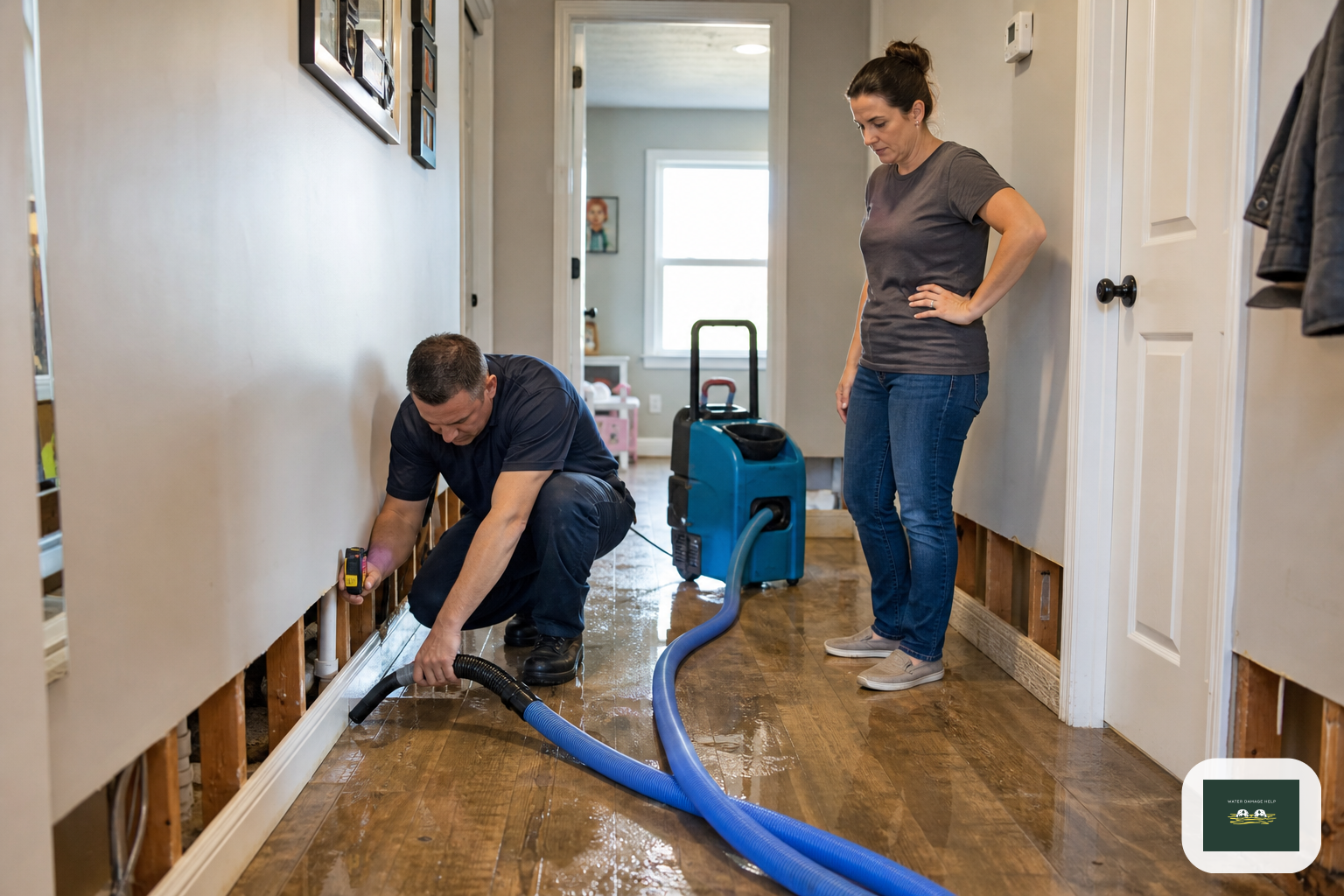
A practical homeowner guide to emergency water extraction, explaining the inspection, water removal, moisture detection, drying, and documentation steps involved.
Emergency water extraction is the rapid removal of standing water from a property, followed by inspection, drying, and moisture control. It is meant to reduce further damage quickly, but it is only the first stage of the larger restoration process. A proper response usually includes finding the source, extracting the water, checking for hidden moisture, and setting up drying equipment so affected materials can dry as safely and thoroughly as possible.
What happens during emergency water extraction
The process usually starts with a visual assessment. A restoration professional identifies the source of the water if it is still active, checks which rooms or building materials are affected, and looks for safety concerns such as electrical hazards, slippery surfaces, or contamination.
1. Initial inspection and safety check
Before any equipment is brought in, the technician looks at:
- where the water entered the structure
- how far it spread across floors and walls
- what materials were exposed, such as carpet, drywall, wood, or insulation
- whether the water appears clean, gray, or contaminated
- whether it is safe to begin work in the area
This step matters because different water sources can require different cleanup approaches. For example, a clean supply line leak is handled differently from flooding or sewage-related damage.
2. Water removal
Once the area is cleared for work, extraction equipment is used to remove standing water. Depending on the situation, that may include portable pumps, wet vacuums, or other extraction tools.
The goal is to reduce the amount of water sitting on the floor and limit how much can soak deeper into materials. Fast removal can help slow down secondary damage, but it does not finish the job on its own.
3. Moisture detection
After visible water is removed, the team checks for hidden moisture. Water often travels beyond what you can see, especially in:
- carpet padding
- under flooring
- drywall
- baseboards
- subfloors
- wall cavities
Moisture detection helps identify areas that still need drying. Without this step, a room may look dry while materials inside the structure remain wet.
Why extraction is only part of the process
A room can be free of standing water and still need significant drying. That is why emergency water extraction is followed by structural drying and ongoing monitoring.
Drying and dehumidification
After extraction, equipment is often placed to move air and remove moisture from the environment. The exact setup depends on the size of the affected area and the materials involved. The purpose is to help remaining moisture leave the structure in a controlled way.
This step is important because trapped water can lead to ongoing damage, odors, and potential mold growth if it is left in place too long. Drying is not just about the surface you can see; it is about the materials behind it as well.
Monitoring during the drying period
Professionals typically return to check drying progress and record moisture readings. They may adjust equipment placement if certain materials are drying more slowly than others.
That monitoring is useful for two reasons:
- it helps confirm whether the affected materials are drying as expected
- it creates a record of what was done and how conditions changed over time
For property owners, this documentation can also support an insurance claim by showing the scope of the damage and the restoration steps taken.
What you should do before the crew arrives
If water damage has just happened, your first job is safety. You do not need to clean everything yourself before help arrives.
Practical steps to take
- Stop the water source if you can do so safely.
- Keep people and pets out of the affected area.
- Avoid standing water if electrical systems, outlets, or appliances may be involved.
- Move dry, undamaged items away from the wet area if it can be done safely.
- Take photos of the damage before anything is moved, if you are able.
- Save receipts or notes for emergency expenses related to the loss.
What not to do
- Do not use household vacuums on standing water.
- Do not assume carpets or walls are dry just because the surface looks dry.
- Do not ignore musty odors or damp spots after the visible water is gone.
- Do not handle sewage-contaminated water without proper protection and professional help.
If you are unsure whether the area is safe, wait for a restoration professional to assess it.
How extraction fits into restoration and insurance documentation
Emergency water extraction is often the first visible step in a broader restoration project. After the water is removed, the team may continue with drying, cleaning, moisture checks, and, if needed, repair or reconstruction work.
For insurance purposes, documentation can be just as important as the work itself. A restoration company may provide:
- moisture reports
- drying logs
- photographs of the affected areas
- estimates or scope notes
These records can help explain what happened and what was done to limit damage. They are useful for claims support, but they do not promise a particular insurance outcome.
When to call a professional immediately
Some situations should be handled right away rather than treated as a minor cleanup:
- water is spreading quickly
- the source of the leak is still active
- flooring or drywall is saturated
- the water may be contaminated
- the affected space is a business, rental, or occupied property
- you notice swelling, odors, or moisture that is not drying
In these cases, professional extraction and drying can help reduce the risk of deeper structural damage.
A practical next step
If you are dealing with a current water loss, focus on safety first, then arrange a professional inspection and extraction as soon as possible. The sooner standing water is removed and hidden moisture is checked, the better your chances of limiting further damage and getting clear documentation for the restoration process.
For property owners in the Camas, Vancouver, Washougal, Portland, and nearby service area, Water Damage Help provides emergency water extraction, structural drying, moisture detection, and insurance claim documentation support.
FAQ
What happens first during emergency water extraction?
The first step is usually a safety-focused inspection. A restoration professional looks at where the water came from, how far it has spread, and whether the area has electrical, structural, or contamination risks before starting extraction.
Is removing standing water enough?
No. Visible water is only part of the problem. Moisture can remain in carpets, padding, subfloors, wall cavities, and other materials, so drying and moisture monitoring are needed after extraction.
What should I do before the crew arrives?
If it is safe, stop the water source, avoid walking through standing water, keep people and pets away from affected areas, and move important items out of the wet zone. Do not enter areas with electrical hazards or suspected sewage contamination.
Will I get documentation for insurance?
A restoration team may provide photos, moisture readings, drying logs, and estimates or reports to support an insurance claim. That documentation can help explain the scope of the damage, but it does not guarantee claim approval.